By Lale Lovell, Vice President
I’m a big fan of historical buildings and architecture, so Oak Park, Illinois has been on my radar for quite a while. I’m excited to share my experience with your for December’s Trail of the Month! Frank Lloyd Wright spent the first 20 years of his career (1899-1909) in Oak Park, leaving behind his studio, a church, and a residential district with over 20 of his home designs. Let’s explore it…
Start your Journey
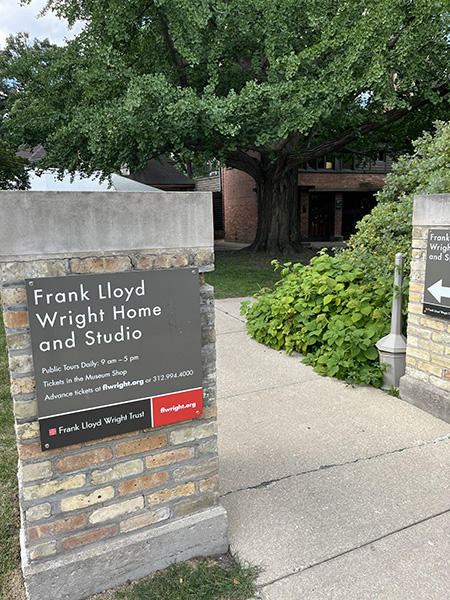
Our day started with a timed entry to Frank Lloyd Wright’s original home and studio. He lived here with his first wife and children, designing homes for wealthy Chicago families that were starting to settle in Oak Park. He left Oak Park quite abruptly in 1909 when he ran off to Europe with Mamah Borthwick Cheney, the wife of one of his clients. To read more about their fascinating story, I recommend the historical novel Loving Frank by Nancy Horan.
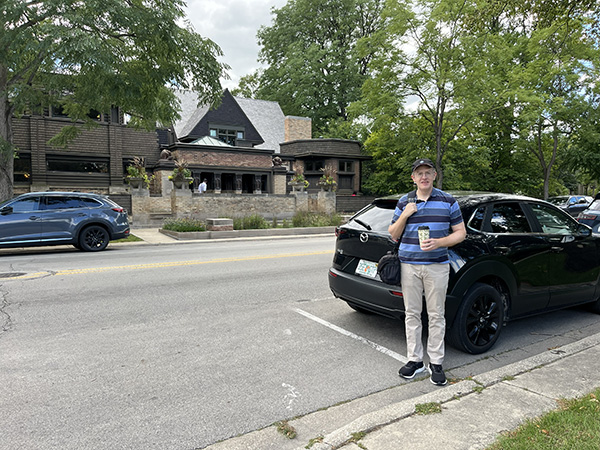
We scored a parking spot directly across the street from his studio, which made us feel optimistic about the day.
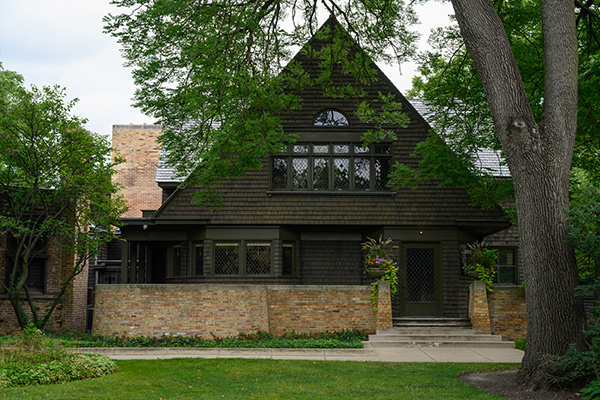
This was his home and studio from 1889-1909. The building was constantly added onto and modified, so it’s not as singular in vision as the prairie-style mansions you usually associate with Frank Lloyd Wright.
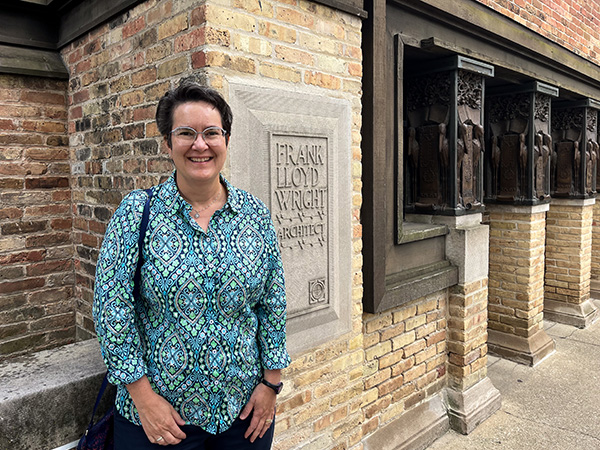
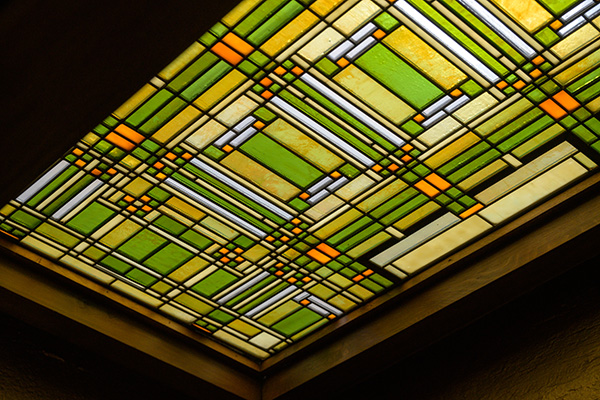
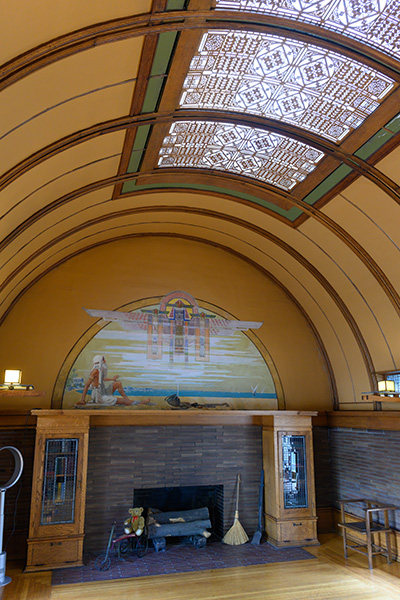
His brilliance in design was evident throughout the tour. For example, upstairs, he created a playroom for his six children. The mural is inspired by Arabian Nights. There’s a built-in grand piano and balcony that allows the room to double as a performance space. Downstairs, in his studio reception room, there’s an original skylight meant to evoke sitting under a forest canopy. All these elements illustrate his lifelong interest in having his spaces evoke serenity and a connection to nature.
Walking Tour Exploration
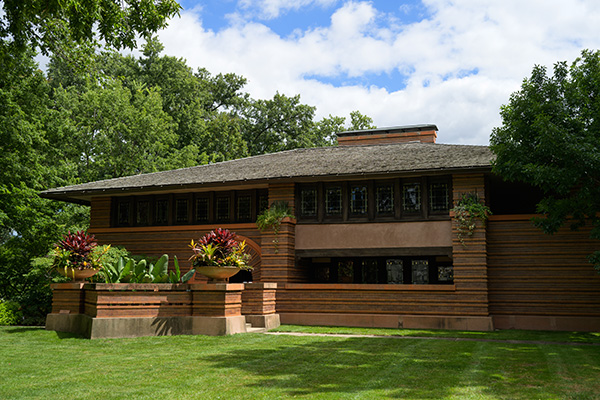
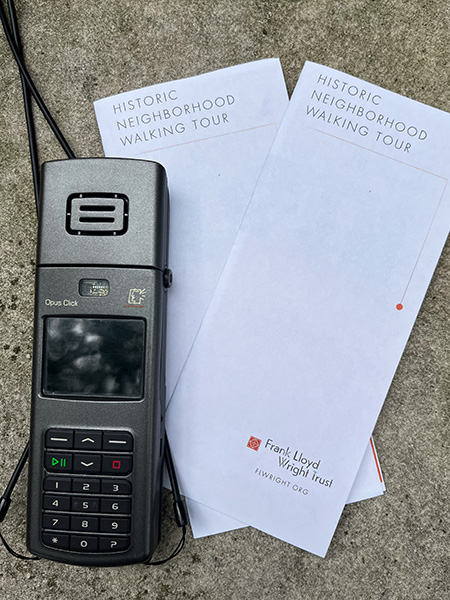
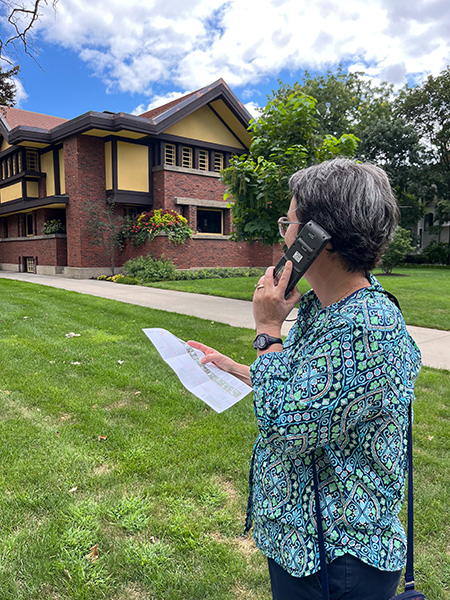
We then took part in an audio walking tour of Forest Ave, which is around the corner from his studio. There were about 10 homes along the street that were designed by Wright. He was very particular about the designs, even to the point of specifying the furnishings. He also notoriously ran over budget. However, the beauty he created can still be admired as you walk down this tree-lined street. Oak Park was a fashionable new suburb of Chicago when Wright started his studio, so he had many wealthy clients interested in his designs. This first home is the Arthur B. Heurtley House (1902).
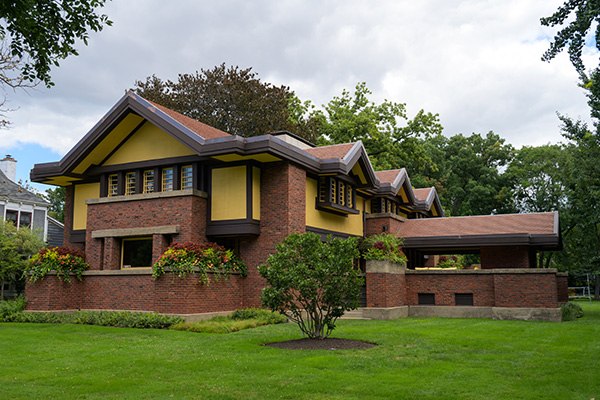
Another standout was the Peter A. Beachy House (1906). Note the entrance is obscured a bit and on the side—this is a classic element of Wright’s Prairie Style. He also pioneered the concept of open floor plans. All these homes are privately owned, so the audio guide was a nice way to learn more about them.
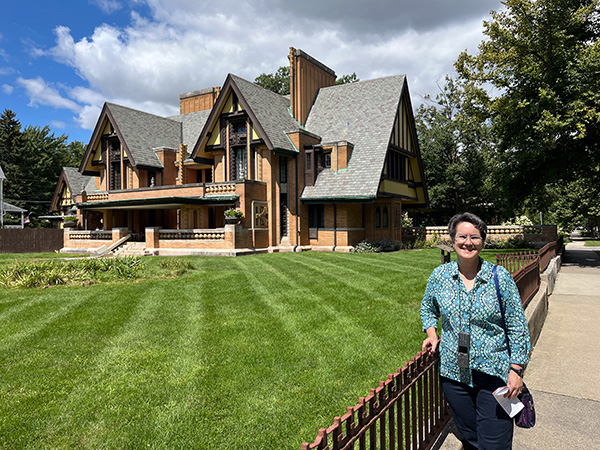
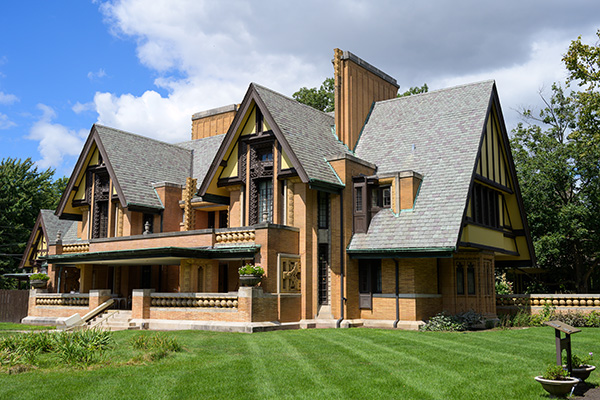
At the end of the tour, we came to the Nathan G. Moore House (1895/1923), which has the distinction of being designed by Wright twice. The original house he designed was Tudor style, but he was asked to redo it after a 1922 fire. He then added Mayan-inspired elements on top! The house was built near the street to allow for an easily accessible office that led to a very expansive lawn.
One More Marvel
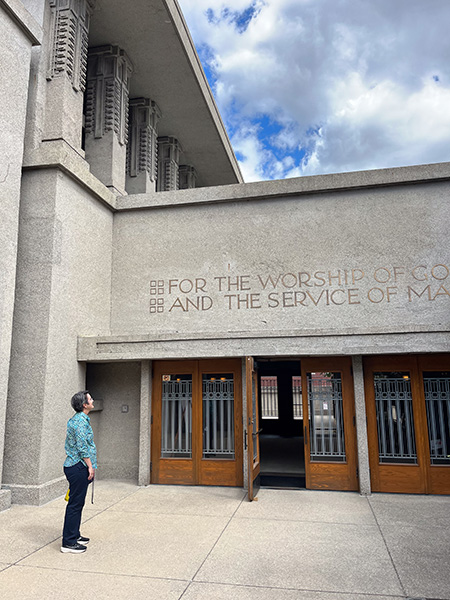
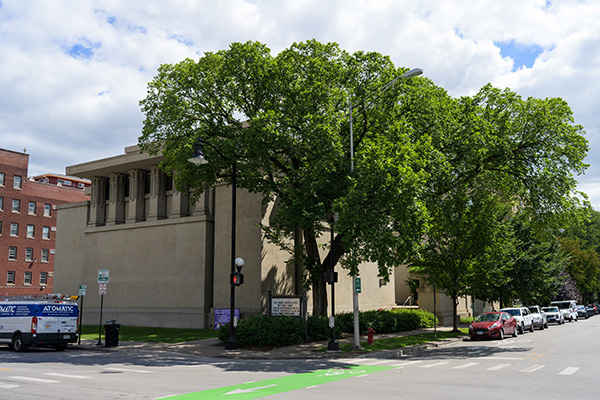
After returning the audio headsets, we walked about a half mile down Kenilworth Ave to arrive at Unity Temple. Wright and his family were Unitarians, and he was commissioned to design the Unity Temple in 1905 after the original building burned down. It’s still an active church today. The building was renovated from 2015 to 2017 at a cost of $25 million.
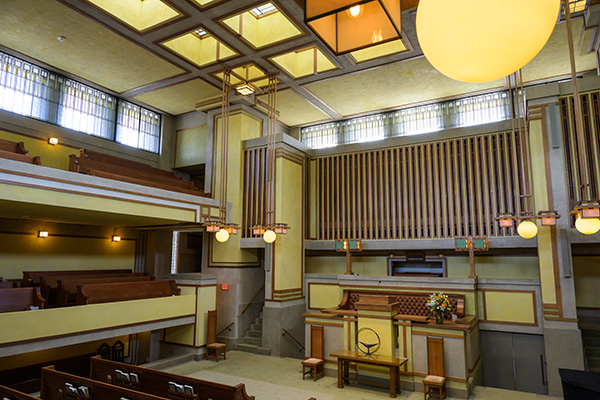
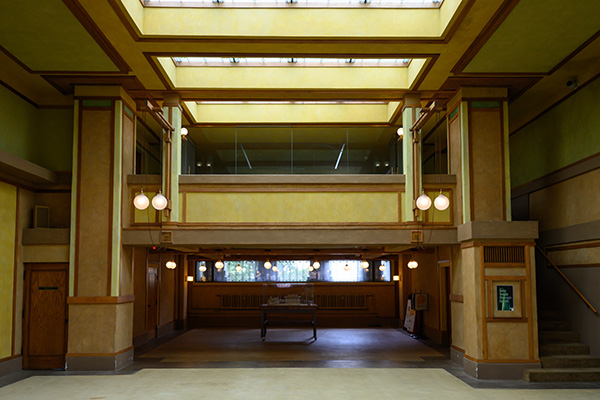
The building is open for tours, and we were lucky that there were only a few people there when we arrived. We admired the fellowship hall and then made our way into the sanctuary. Wright designed the sanctuary with tiered seating so that everyone would have a seat close to the pulpit. The array of skylights in the ceiling makes the space feel very light and spiritual. It’s quite a contrast from the outside of the building.
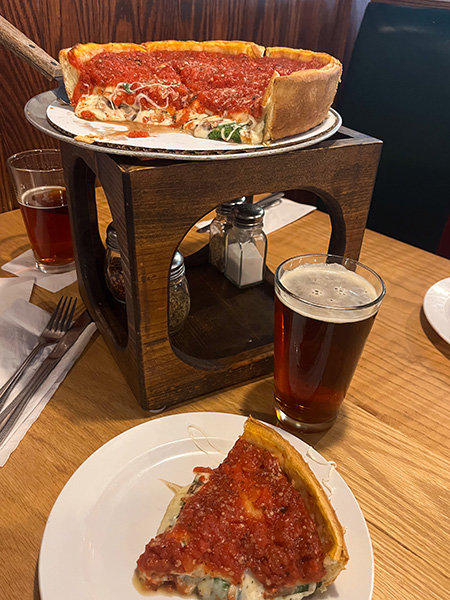
After a long day of touring (with no lunch), we settled into an early dinner of Chicago-style deep-dish pizza. Both my partner and I realized we had never had this authentic version before. It was more like a pot pie than a pizza, but oh so tasty! What a great way to end the day.
Final Thoughts
After reading Loving Frank and watching a Ken Burns documentary about his life, I came to have a deeper understanding of this amazing architect. He had a complicated personal life and went through a long period of time where he really struggled professionally. However, he stayed true to his vision to create expansive, serene designs that encouraged people to really connect with their spaces. I don’t think he would have been an easy person to work with, but you must admire the legacy of beautiful buildings he’s left behind. In his words…
“The longer I live the more beautiful life becomes. If you foolishly ignore beauty, you will soon find yourself without it. Your life will be impoverished. But if you invest in beauty, it will remain with you all the days of your life.” ― Frank Lloyd Wright
Lale Lovell

Lale Lovell, Ph.D. is the Vice President of Transformance Advisors. She is a chemical engineer with over 20 years of engineering and management experience in a variety of technology companies in Colorado, including Lexmark and Seagate. Lale brings a wealth of expertise to her role, specializing in Lean thinking and coaching.
Her dedication to continuous improvement and community service underscores her commitment to professional excellence for her clients.
As time permits, Lale likes baking, reading historical fiction, going on walks/hikes, and traveling to new places.
Want More?